
It’s not unusual to see one aspect of popular culture borrow from another. In fact, it probably happens more than we know. Part of it is inspired other parts are paid in homage and the rest is either purely coincidental or unconscious. Fringe is not immune to this and there has been several examples of this in the past. Overtly there are the salutes or references to the film “Forbidden Planet. Others are more subtle like the architectural design of the Massive Dynamic interior and the sets of German Expressionism film of the 1920’s.
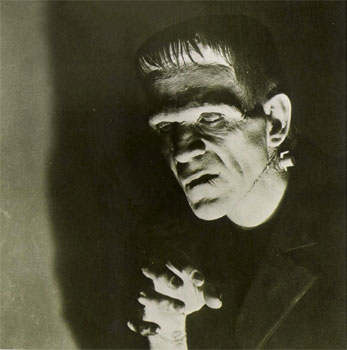
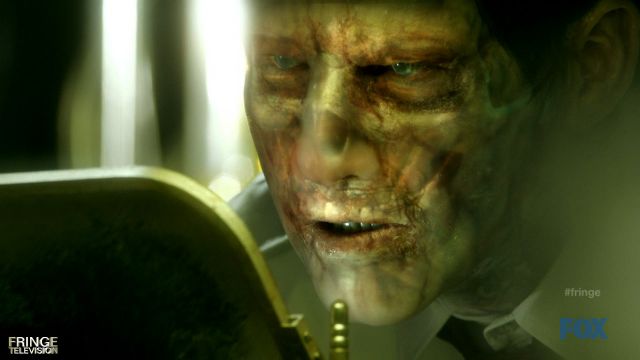
This season has seen a raft of salutes, winks and nods and clever homages to film and books. In the first episode, “Neither Here Nor There”, the translucent shape shifters brought to mind the story of Frankenstein and the subsequent films based on that story. There was also mention of the book, “The Spy Who Came in From the Cold “.
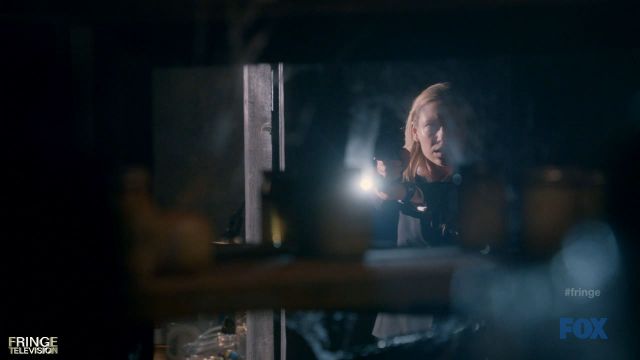
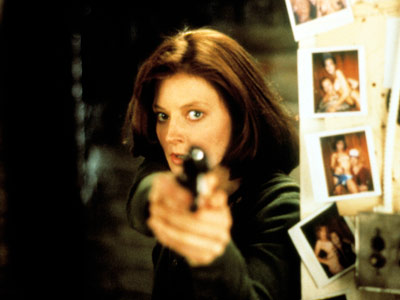
The second episode, “One Night in October”, had a scene near the end that was eerily reminiscent of “The Silence of the Lambs” where Agent Clarice Starling goes looking for the murderer, Buffalo Bob. In the episode Agent Dunham nearly does the same thing.
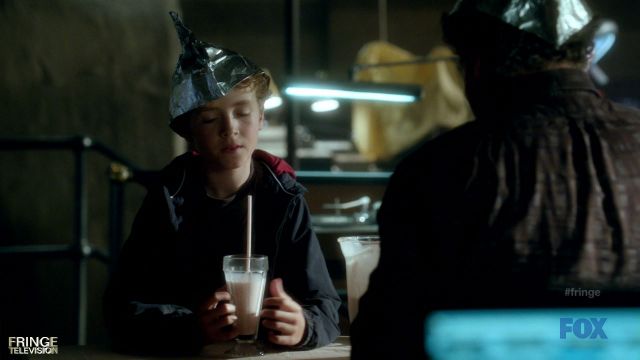
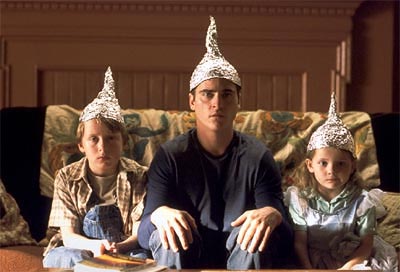
In the most recent episode, “Alone in the World” I thought of Walter as Robinson Crusoe with his girl Friday/Astrid. Walter is often seen as alone and adrift with nothing to anchor him but his trusty sidekick Astrid. But more directly was the homage paid to the movie “Signs” When Walter and Aaron dressed up in their foil hats much like the scene in Signs.
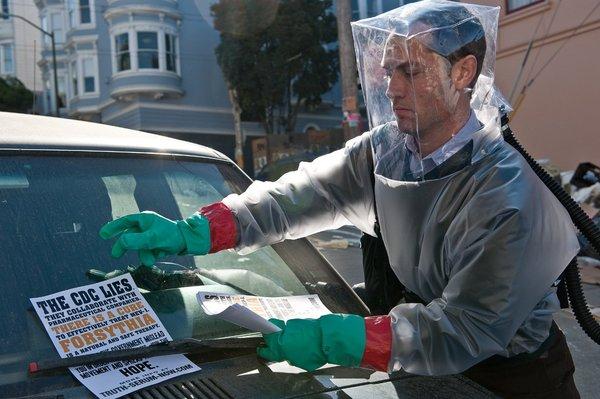
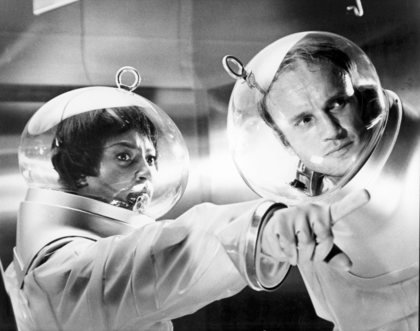
Even the fungi character of “Gus” could have been inspired by such movies like last years “The Ruins” or this years “Contagion” or even the old classic, “The Andromeda Strain”. Each of these movies featured an inhuman character that preyed on humanity and was quite capable of doing widespread damage.
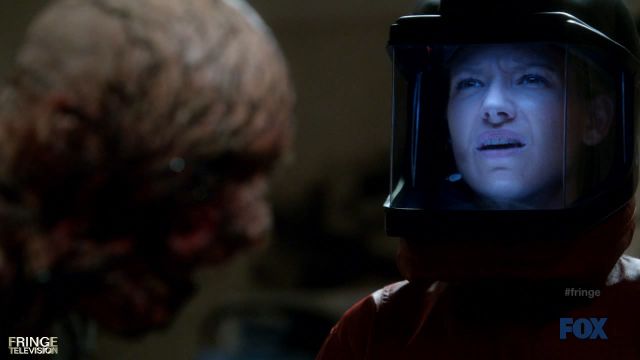
So, as always, I ask you all your thoughts. What have you spotted in Fringe that reminds of a book you’ve read or a movie you’ve seen? It doesn’t matter if it was this season or any of the previous three. Have you spotted something you know?


Great post Dave, the references to other great SciFi works always make me smile and are a big part of what make Fringe such a layered and engaging show. It’s a great way for the writers to connect with the fans and credit the works that have influenced them.
I noticed a similarity between the most recent episode, “Alone in the World,” and the classic SF short story “Blood Music” by Greg Bear. In it, a scientist designs and injects himself with biologically based microchips that begin to reproduce and improve his body’s efficiency. They form a symbiotic bond and the scientist quickly comes to understand the thoughts and feelings of this hivemind, and it subsequently begins to take over his body and attempts to spread to others through drains and water supplies. His friend (the protagonist) must then decide whether he is willing to kill his friend to stop the growth of the network and to spare the lives of millions. The story is much more involved and powerful than I can explain here and I highly recommend it to anyone that has not read it.
Fringe continues to brilliantly allude to and reimagine classic SF stories, but it is especially impressive to me that it always manages to do so while maintaining an optimistic tone. “Blood Music” is by no means a cheery story, as its main themes involve the insignificance of human life and the unimaginable vastness of our universe. While Fringe may draw from this story (and countless other bleak stories like “Silence of the Lambs” or “Do Androids Dream….”), it does so with unstoppable optimism. Themes like the triumph of the human intellect and the value of imagination are what set Fringe apart from many of the classic works it draws from.
Thanks for the reply Mirror Jones and the compliment. They are much appreciated. I showed my wife (Inter-dimensional Nancy) your reply and pointed out to her that it was another example of how the reply is better than the actual post. Well done.
It’s not ofter someone cites a work of science fiction that I am not familiar with. (More points for you.) I will have to check out “Blood Music”. Thanks for the tip.
I like how you’ve pointed out how Fringe keeps an optimistic tone. I do remember Peter saying how “there is always hope” especially in light of activating the Machine. But I hadn’t thought it was so pervasive a theme. In retrospect I believe you are right and I will keep a closer on this.
Excellent pictures…a picture truly is worth a thousands words.
I immediately thought of Signs. But I forgot about the tie in from contagin/andromedia strain…there is even a good Star Trek Picture of Captain Kirk:
http://4.bp.blogspot.com/_mpBGa4P5jUo/TMwwXEVNtzI/AAAAAAAAFxc/izYXnlyUSD0/s1600/suit68.jpg
and I never even thought of the Frankenstien comparison other than Walter and the dead bird.
Great post!
Good to hear from “CharlieFromVirginia” and thanks for the kind words. Your link to Kirk in 23rd century bio-hazard suit was priceless. The suits from “The Andromeda Strain” actually look more practical in comparison.
I’m hoping we see Walter experiment further with the re-animation of dead test subjects. Especially in light of what he said that it wasn’t really alive. The possibility he may re-animate a crucial character is exciting.
Thank you so much for writing about this! This is the reason I love Fringe and JJ Abrams shows in general. You can learn so much just by watching an episode of a show that also awesomely entertaining.
The ability to weave references to other pop culture, as well as science, mythology, religion, etc into a show is what made Lost one of the best shows of all time. Fringe does it to a lesser degree (it mostly focuses on science and pop culture) but it still makes it an exceptional show in a sea of really terrible television.
I can’t think of any specific scenes that draw reference to something, but I’ve always tied Fringe very closely with The Wizard of Oz. I think the allusion is pretty clear — four ragtag people go on a journey in an alternate world where they (unbeknowst to them) are alternate versions of their “real” selves. They are after the great and powerful wizard (Bell) only to find that he’s just the man behind the curtain.
The only scene that really reminded me of that was during “Over There Part 2” when Bell and Walter drive through the wasted countryside towards Boston. There is a shot of the car along a long straight road with the city shining on the horizon. It felt like a gloom and doom version of The Emerald City of The Wizard of Oz.
Also, I commented in my feedback for “Neither Here Nor There” that a certain scene was clearly a nod to Abram’s Alias. Clint and Darrell have not watched the show so they said they didn’t know what the reference was.
Basically, when Olivia and Lincoln are entering the bridge, they go through a room where they are “scanned” by a red light. This happened in an very similar light on almost all the first season episodes of Alias when Sydney Bristow had to be scanned to enter SD-6.
Fringe:
http://i89.photobucket.com/albums/k236/SugarPlumb06/Fringe401NeitherHereNorThere0008757.jpg
Alias:
http://i89.photobucket.com/albums/k236/SugarPlumb06/alias_206_0013.jpg
Firefly, you referenced “Lost” as one of the shows that had successfully woven the fabric pop culture, science, mythology and religion into its narrative and that is certainly true. You also noted how Fringe does this to a lesser degree. It got me to thinking that is probably a good thing. Lost attempted to pull so many strings together that it eventually got entangled in its on mythology. One they were never successfully concluded. (Still bitter!) I’m thinking Fringe understands its scope and has resisted that temptation and this alone should make it a better show with a more satisfying conclusion.
I like the parallel you’ve drawn between the Over There (OT) Boston and the Emerald City of OZ. Only this time we see the “doom and gloom” version. I’ll keep that in mind as not every parallel or pop culture allusion we see will be a positive one.
Furthermore, did you know that the real city of Boston was surrounded by an “Emerald Necklace”? Perhaps you caught on to something in your comparison of cities that the writers gave a sly wink and nod to.
http://en.wikipedia.org/wiki/Emerald_Necklace
Oh, and yes, I heard your feedback. The Alias similarity is unmistakable. Thanks for the picture links.